
What Can Outdoor Living Contractors Build Besides Patios In Houston Yards
If you have been staring at a flat, builder-grade backyard in Katy or Fulshear, wondering whether a patio is even worth it given how quickly Houston rain turns everything into a soggy mess, you are asking exactly the right question.
A concrete slab alone does not solve shade, does not handle drainage, and does not give your family a reason to stay outside past noon in July. The real scope of what a residential outdoor living contractor can build goes far beyond a poured pad, and understanding that scope changes how you plan your project from the start.
PearceScapes knows how Harris County clay behaves after three inches of rain and how the summer heat load on a west-facing yard in The Woodlands demands a different structure than what works in a cooler climate.
Keep reading to find out which outdoor living features make the most sense for your yard size, your soil type, and your budget, and why the combination of elements matters far more than any single structure on its own.
How Full Outdoor Living Plans Expand a Basic Backyard
A well-planned outdoor space is not a collection of separate projects bolted together; it is a coordinated set of zones that address shade, function, drainage, and movement all at once.
How Contractors Combine Function, Shade, and Drainage
Experienced contractors look at your yard as a system. They think about where water flows during a storm, where afternoon sun hits hardest, and where the family naturally gathers before they place a single structure. In Houston, that line of thinking matters because skipping drainage or shade planning means your investment sits unused for 8 months out of the year.
A typical full-scope outdoor living plan might layer these elements together:
- A covered structure for shade and rain protection
- A cooking or entertaining zone positioned away from prevailing wind
- Seating areas anchored by hardscape so they stay level
- Drainage channels or graded surfaces that shed water toward the street or a collection point
- Lighting that makes the space usable after the heat breaks at night
Each element depends on the others. A pergola over a poorly graded surface floods on its footings. A kitchen placed upwind of the house pulls smoke through open doors. Contractors who plan all of this together deliver a yard that holds up year-round.
Why Gulf Coast Conditions Change the Design Scope
Houston's clay-heavy Vertisol soil shrinks and swells with the wet-dry cycle, which puts stress on any structure with a shallow or improperly poured foundation. Footings that work in Central Texas often crack or shift here within a few years. That alone expands the scope of what a contractor needs to address before the fun features go in.
Rainfall in the Greater Houston area regularly delivers two to four inches in a single event.
Communities like Bridgeland and Towne Lake were engineered with detention ponds for a reason.
Your individual yard still needs to move water away from structures, doors, and planted areas to prevent property damage and plant loss from prolonged saturation. The design decisions that handle those realities are what separate a quality outdoor living project from one that looks good in photos but fails by the second spring.
Shade Structures That Make Heat More Manageable
In a Houston summer, shade is not a luxury; it is the difference between a backyard your family avoids and one they actually spend time in.
Pergolas for Filtered Coverage
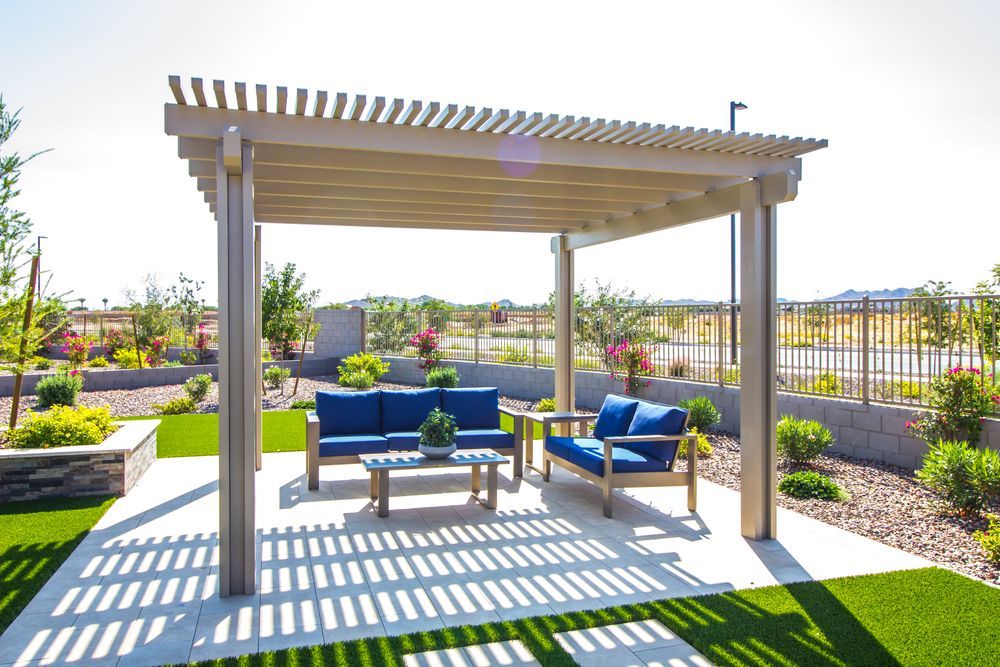
A pergola is an open-rafter structure that cuts direct sun while keeping airflow moving underneath. That airflow matters on humid August afternoons, when stagnant air under a solid roof can feel just as oppressive as standing in the sun. Contractors typically set pergola posts on concrete footings drilled deep enough to remain stable through Houston's clay soil expansion cycles, a detail that cheap kits miss entirely.
You can add shade fabric, polycarbonate panels, or climbing plants to adjust how much light filters through. In The Woodlands, where HOA aesthetics tend to be consistent, a wood or steel pergola with a clean-line design can complement the neighborhood's look without standing out.
Pavilions and Covered Roof Extensions
A pavilion is a fully roofed structure that connects to the house or stands independently in the yard. Unlike a pergola, it keeps you dry during rain, which in Houston is a practical necessity for anyone who wants to use their outdoor kitchen or dining area during a passing afternoon storm. Pavilions are often permitted structures, so your contractor will pull the appropriate permits for your municipality before breaking ground.
Covered roof extensions attached directly to the home's roofline share the same rafters and are engineered to match the existing structure. They require a permit and a licensed contractor, but they create the most weather-protected outdoor living area possible without building a room addition.
Privacy Screens and Architectural Overheads
Pergola-and-screen combinations have become common in suburban communities like Fulshear and Katy, where lots can sit fairly close together. A louvered or slatted privacy screen mounted on a pergola frame gives you both overhead filtered shade and side-facing privacy without fully enclosing the space. This keeps airflow moving, which is important when humidity is high and you need ventilation to stay comfortable.
Louvered roof systems that let you adjust the angle of the blades are a higher-cost option, but they give you precise control over light and rain protection without committing to a fully enclosed space. The next step that many homeowners pair with these structures is an outdoor kitchen, which brings the logic of proximity and wind direction into play.
Cooking and Dining Areas Built for Daily Use
An outdoor kitchen becomes one of the most-used features in a Houston yard because the cooking happens outside rather than heating up the house during nine months of warm weather.
Outdoor Kitchens With Utility Connections
A built-in outdoor kitchen requires a gas line extension, electrical service for outlets and appliances, and sometimes a water line for a sink. These are licensed trade installations, not add-ons a homeowner should attempt on their own. Contractors coordinate with plumbers, electricians, and the municipal inspector to ensure the work is properly permitted and inspected.
The kitchen structure itself is typically built from concrete block or a steel-stud frame with a cement-board skin, then finished with stone veneer, stucco, or porcelain tile. These materials handle Houston's humidity and temperature swings far better than wood-framed structures, which can delaminate or rot within a few years in the Gulf Coast climate.
Grill Stations, Bars, and Serving Counters
Not every outdoor cooking setup needs to be a full kitchen. A grill station with a built-in grill head, a few feet of granite or concrete countertop, and a small undercounter refrigerator covers most families' entertaining needs at a lower cost than a full outdoor kitchen build. Bars and serving counters can face a pool or seating area and double as food-prep surfaces when guests are over.
Countertop material matters more outside than it does indoors. Granite and porcelain tile resist UV fading, absorb less heat than some composites, and hold up to the cleaning products you use after cooking. Concrete countertops can be sealed, but they require resealing every year or two in this climate to prevent staining and surface damage.
Built-In Seating for Entertaining
Built-in bench seating around a kitchen counter or along the edge of a pavilion eliminates the need to store and drag out furniture every time you use the space. Masonry benches with a capstone seat are essentially maintenance-free: they do not blow over in a thunderstorm and clearly define the zone for guests. Cushions can come and go with the season.
That permanent framework also anchors the visual layout of your outdoor space, which directly informs how fire features and lighting are positioned around it.
Feature Zones That Extend Evening Comfort
The evening hours in Houston from about May through October are often the only comfortable time to be outdoors, and the right features make those hours genuinely enjoyable.
Fire Pit Gathering Spaces
A built-in gas fire pit or wood-burning fire ring turns a seating area into a destination after dark. Gas fire pits require a licensed gas line extension and a shut-off valve accessible within a few feet of the fixture. In communities with HOA restrictions, such as some sections of Bridgeland or Towne Lake, there are rules on fuel type, clearance from structures, and fire feature height that your contractor should review before any design is finalized.
Gas fire features tend to be more practical for Houston yards because they ignite instantly, produce less smoke, and can be turned off cleanly without waiting for embers to cool. That low-maintenance quality matches how most families actually use outdoor spaces on a weeknight.
Landscape Lighting for Safety and Ambiance
Low-voltage LED landscape lighting installed along walkways, in planting beds, and under overhead structures extends your yard's usability past sunset without creating glare or attracting large swarms of insects, as older halogen fixtures did. Contractors run wire through a conduit set below grade to protect it from lawn-maintenance equipment and soil movement.
In The Woodlands and surrounding communities, landscape lighting design that highlights tree canopies and bed edges also signals property care to neighbors and appraisers. It is a visible investment that reads during evening drive-bys.
Water Elements That Add Sound and Cooling Effect
A recirculating fountain, a sheet waterfall connected to a planting wall, or a pondless stream feature adds ambient sound that masks neighborhood noise and creates a perceptible cooling effect near a seating area. These features work on pump systems set on a timer and require a GFCI-protected outlet at the feature location.
In clay soil, the basin or reservoir for a recirculating water feature must be set below the frost line and carefully backfilled to prevent the surrounding soil from cracking the shell as it expands after a rain event. The functional decisions that go into a water feature are closely tied to the structural hardscaping that holds the whole yard together.
Structural Hardscaping That Solves Site Problems
Retaining walls, walkways, and drainage-integrated surfaces are not finishing touches; they are foundational to a yard that functions correctly after a storm.
Retaining Walls for Grade Changes
A retaining wall holds a soil grade change in place, which matters on any Houston lot where the yard drops toward a neighbor's fence line or where you want to create a raised planting bed above clay-dominant soil.
Walls built from concrete block, natural stone, or segmental retaining wall units need a gravel backfill and a drainage pipe at the footing to prevent hydrostatic pressure from pushing the wall over after heavy rain. Without that drainage layer, clay soil saturated by a two-inch rainstorm can generate enough pressure to crack or topple a wall within a few years.
Walkways and Steps That Improve Access
A paver or flagstone walkway connecting the back door to a detached garage, a pool gate, or a garden area reduces lawn wear and keeps mud out of the house during wet months. Steps built from the same material as your patio or retaining wall create a cohesive look while safely managing grade changes.
Contractors set walkway base layers in compacted crushed granite or decomposed granite with a sand setting bed, which allows for some flex as the clay underneath moves without cracking individual units the way a rigid concrete base would.
Drainage-Integrated Surfaces for Heavy Rain
Permeable paver systems and channel drains embedded in hardscape surfaces provide water a path before it pools. In neighborhoods where lots sit close to detention zone boundaries, like parts of Cypress or The Woodlands, managing your own lot's runoff prevents water from piling up at the property line and seeping back toward the house's foundation.
Your contractor can slope hardscape surfaces toward a central channel drain that connects to a French drain system or a yard inlet, keeping the surface dry within minutes of a storm passing. Understanding how drainage-integrated surfaces protect clay soil yards is especially useful for homeowners in these communities.
That kind of infrastructure work forms the base layer under everything else, and getting it right before the aesthetic features go in is what separates a project that holds its value from one that starts to fail by the third rainy season.
How to Prioritize the Right Mix for Your Property
Choosing which features to build comes down to lot size, how your yard drains, and which spaces your family will realistically use.
Matching Features to Yard Size and Budget
A small backyard in a Fulshear townhome community and a half-acre lot in Katy need completely different approaches. On a compact lot, a covered grill station, built-in bench seating, and an overhead pergola can meet most entertaining needs without crowding the yard. On a larger lot, you have room to separate the cooking zone from the fire pit area while still leaving open lawn between them.
Budget sequencing also matters. The structural work, meaning footings, drainage, and utility connections, costs more upfront but enables everything else to function correctly. Adding a pergola on a poorly graded surface wastes money. Adding a kitchen without a proper gas line creates a safety problem. A useful way to think about priority order:
- Grading and drainage corrections first
- Overhead shade structure second
- Kitchen or grill station third
- Fire feature and lighting fourth
- Water elements and decorative details last
That sequence is not rigid, but it reflects the way site conditions should drive design choices rather than the other way around.
What Homeowners in The Woodlands, Katy, and Fulshear Should Ask Next
Before contacting a contractor, pull your HOA guidelines and your survey. Both documents contain restrictions that affect setbacks, structure height, fuel type for fire features, and impervious cover limits, which is the total percentage of your lot that can be covered by hardscape. Some communities in The Woodlands and Katy have strict impervious-cover caps that limit the combined patio and hardscape footprint.
Ask any contractor you speak with whether they pull permits for all trade work, whether they provide a site plan as part of their design process, and whether they have experience building on Houston-area clay soil specifically. Those three questions will quickly separate contractors who build for this region from those who build generically and adapt afterward.
Frequently Asked Questions
If You Want an Outdoor Living Room for Houston Humidity, What Structure Makes the Most Sense: a Covered Patio, a Pergola, or a Pavilion?
A fully covered pavilion or a covered patio extension gives you the best protection from both sun and rain, which matters when Houston afternoon storms roll through with no warning. A pergola works well for filtered shade but leaves you exposed when it rains, so it is better suited as a secondary structure over a seating area that already has a nearby covered zone.
What Can You Add to Your Backyard so It Still Drains Well After a Gulf Coast Storm, Especially With Clay Soil in Cypress and The Woodlands?
Channel drains embedded in paver surfaces, French drains positioned along fence lines, and sloped hardscape grades that direct water toward yard inlets all help move water off your lot quickly. In Cypress and The Woodlands, where clay soil slows absorption significantly, surface drainage that moves water away from structures within fifteen to thirty minutes of a storm is the realistic goal, not full absorption.
How Do You Plan an Outdoor Kitchen so Smoke, Grease, and Heat Don't Blow Back Into the House on a Summer Evening?
Position the grill at least 10 to 15 feet from any door or window opening, and orient it so that the prevailing evening breeze in your area carries smoke away from the house rather than toward it. In Houston, summer evening winds typically come from the south or southeast, so placing the grill on the north or northwest side of the outdoor kitchen is generally the safer layout.
What Lighting Options Make Your Backyard Usable After Dark Without Glare, Bugs Swarming the Fixtures, or Tripping Hazards?
Low-voltage LED fixtures aimed at beds, trees, and path edges provide enough visibility without producing the bright white light that draws large insect populations. Amber-toned LEDs attract significantly fewer insects than cool-white bulbs. Path lights set low to the ground illuminate steps and grade changes without pointing light upward into guests' eyes.
If You Live in Bridgeland or Towne Lake, What Should You Check Before Building a Fire Pit, Outdoor Fireplace, or Gas Line Extension?
Review your HOA architectural guidelines for fuel type restrictions, clearance minimums from structures and fence lines, and whether an architectural review board approval is required before any permit is pulled. Both Bridgeland and Towne Lake have active HOA review processes, and starting construction without approval can result in a required removal at the homeowner's expense.
What's the Right Way to Build a Walkway, Steps, or Retaining Edge so It Doesn't Shift or Crack When the Ground Stays Wet and the Heat Hits?
Set the base layer in a minimum of four inches of compacted crushed granite topped with a one-inch sand setting bed, which allows individual paver units to flex slightly as the clay underneath moves without transferring that stress to the surface. Avoid rigid concrete bases under pavers on Houston clay soil; they crack as the ground heaves and takes the surface with it. Use polymeric sand in the joints to prevent washout during heavy rain.
Ready to Plan Your Backyard Beyond the Basic Slab
Your yard in The Woodlands, Katy, or Fulshear has more potential than a concrete patio alone can unlock. The structures and features covered in this guide work together to create a space your family actually uses, one that holds up through Gulf Coast rain, clay soil movement, and summer heat without falling apart by year three.
PearceScapes offers free consultations for Houston-area homeowners who are ready to map out what their yard can realistically support. The conversation starts with your site, your drainage, and your budget, not a catalog of features pushed toward every client the same way.
Reach out today and find out which combination of features makes the most sense for your specific property.