
Trees for Clay Soil With Poor Drainage: Best Choices That Thrive
If you have ever planted a tree in a Cypress or Bridgeland yard only to watch it die within a year, Houston clay soil is the most likely culprit. The heavy Vertisol clay that runs through most of the Greater Houston area holds water long after rain events, and tree roots in saturated soil will suffocate, rot, or fail to establish.
Choosing the right trees for clay soil with poor drainage is one of the most practical decisions you can make as a Houston-area homeowner. PearceScapes understands which species hold up through wet winters, brutal summers, and the kind of slow-draining low spots that show up on nearly every suburban lot in this area.
Keep reading to learn which trees perform best in wet Houston clay, how to match the right tree to your specific yard conditions, and what planting methods actually work when the soil drains slowly. You will also learn when tree selection alone is not enough and drainage work needs to come first.
Why Houston Clay and Poor Drainage Kill the Wrong Tree Fast
Houston sits on some of the densest, most water-retentive clay soil in the country. A tree that thrives in North Texas sandy loam or Georgia red clay may struggle badly in a Bridgeland or Towne Lake yard after a single heavy storm.
What Heavy Clay Does to Roots in Bridgeland and Towne Lake
Clay particles are extremely fine, and they pack together tightly. When water enters clay soil, it fills the tiny gaps between particles and stays there. Roots need both water and oxygen to function, and waterlogged clay delivers one while cutting off the other.
Most ornamental or shade trees planted without regard for drainage will sit with their roots in saturated soil for days after a rain event. This creates conditions for root rot, a fungal problem that spreads quickly in Houston's warm, humid climate. Many homeowners in Bridgeland repeatedly replace trees without realizing that soil conditions, not the planting, are the core issue.
Soil compaction makes this worse. Heavy clay that gets walked on or driven over loses what little pore space it had. A compacted clay layer, even a few inches down, can act like a bowl, trapping water above it and preventing downward drainage. Understanding this problem is the first step before you choose a single species.
When Standing Water Is a Planting Problem vs a Drainage Problem
Standing water that clears within 24 hours after a heavy rain is usually manageable with the right tree choice. Standing water that lingers for two to three days or more points to a deeper drainage problem that no tree alone can solve.
A simple test: dig a hole about 12 inches deep after a rain, fill it with water, and time how fast it drains. If water remains after four hours, your drainage rate is too slow for most tree species. If it is still there after 24 hours, you likely need a drainage solution before planting anything significant.
The distinction matters because it changes what you do next. Wet-tolerant trees can handle slow-draining clay. But they cannot survive a site that functions more like a seasonal pond. Identifying which situation you have saves you time, money, and the frustration of watching another tree fail.
How Lot Size, Foundation Distance, and Root Spread Change Your Options
A large shade tree in a tight suburban side yard can be more damaging than a dry spell. Root systems of mature trees like bald cypress or sycamore can spread 30 to 50 feet wide, and in clay soil, those roots aggressively follow water sources.
Planting a large tree within 15 to 20 feet of your foundation is a risk most Houston homeowners underestimate. Clay soil also shrinks and swells with changes in moisture, and tree roots pulling water from the soil near a slab can accelerate that movement. Front-yard plantings near the driveway, walkway, or home entry require careful size selection.
Backyards with open space give you more flexibility, but understanding your utility easements and any setbacks in a master-planned community like Towne Lake matters before you dig. Once you know your constraints, matching tree size to the space becomes a clearer decision.
Best Tree Picks for Wet Clay in Suburban Yards
Several tree species not only survive Houston's clay and drainage conditions but actually prefer them. The list below focuses on species that tolerate wet roots, handle Gulf Coast heat and humidity, and work on typical suburban lot sizes.
Medium to Large Shade Trees for Roomier Lots
Bald cypress (Taxodium distichum) is one of the most reliable large trees for wet Houston clay. It tolerates standing water, handles full sun and high humidity, and grows quickly enough to provide real shade within several seasons. Mature height reaches 50 to 70 feet, so it needs open space away from the home.
River birch (Betula nigra) is another strong pick for low, wet areas. It grows 40 to 50 feet tall, with attractive peeling bark, and tolerates both seasonal flooding and heavy clay. It performs well in full to partial sun and is resistant to the bronze birch borer that plagues birch species in other regions.
Willow oak (Quercus phellos) and swamp white oak (Quercus bicolor) both tolerate wet clay and provide excellent canopy in larger backyards. Willow oak remains dense and upright, reaching 40 to 60 feet tall, with fine-textured leaves that give it a softer look than a typical oak. Swamp white oak tolerates seasonal flooding and offers reliable fall color even in Houston's mild winters.
Black gum (Nyssa sylvatica) is a native tree that shines in moist, acidic clay. It grows 30 to 50 feet tall, offers some of the most reliable fall color in the Houston area, and, once established, tolerates both wet soil and periods of summer drought.
Smaller Ornamental Trees for Front Yards and Side Yards
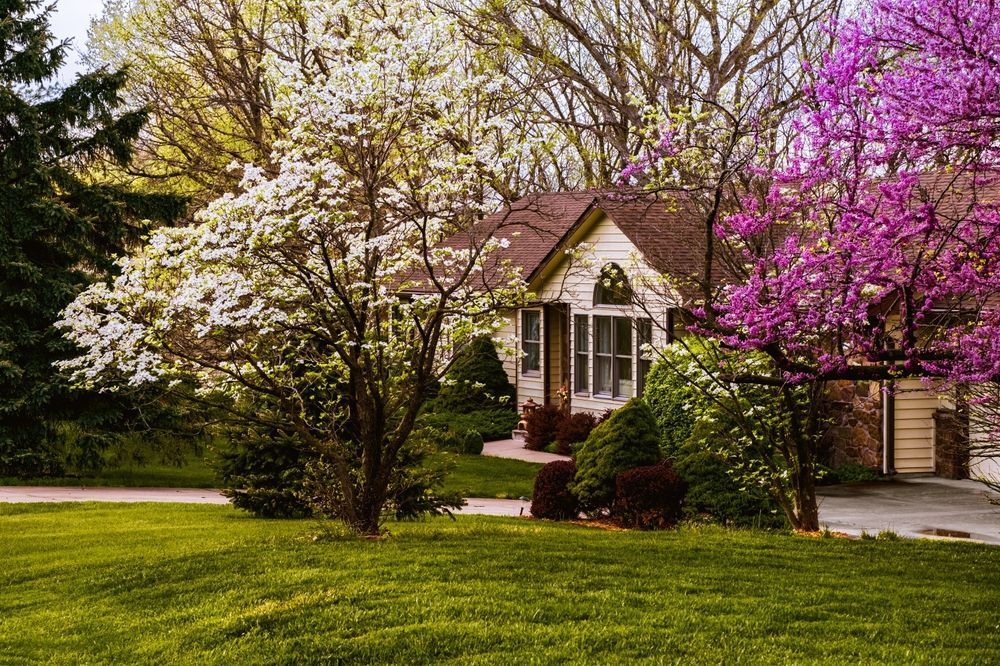
Eastern redbud (Cercis canadensis) grows 20 to 30 feet tall and handles moist clay soil well. It blooms in early spring with bright pink flowers and provides good shade in a front yard without threatening the foundation. It does best in partial shade in the Houston climate, where afternoon sun can stress it.
Sweetbay magnolia (Magnolia virginiana) is a semi-evergreen tree that reaches 20 to 35 feet and naturally grows along wet Gulf Coast margins. It tolerates clay, humidity, and partial shade better than the more common Southern magnolia, with smaller leaves and a lighter overall form.
American hornbeam (Carpinus caroliniana) is a slow-growing understory tree that reaches 20 to 30 feet and thrives in moist, shaded clay. It works well along fences, near established trees, or in tight side yards where other species would quickly outgrow the space.
Serviceberry (Amelanchier spp.) offers early-spring blooms, edible berries, and tolerance of moist clay, all at a manageable 15 to 25 feet. It prefers partial shade in hot climates and makes a good layered planting alongside larger canopy trees.
Trees to Use Carefully Near Patios, Drives, and Foundations
Some wet-tolerant trees carry risks that matter on smaller suburban lots. Keep these cautions in mind:
- Silver maple grows fast in wet clay but has shallow, invasive roots that crack concrete and lift pavers. Keep it away from hardscape.
- Weeping willow needs space and water. Its roots seek out irrigation lines, drains, and any buried pipe. Not a good choice near a home.
- Green ash tolerates clay well but is highly vulnerable to emerald ash borer, which has reached the Houston area.
- Sweetgum handles wet clay and provides good fall color, but it drops spiky seed balls, making it a poor fit near patios or play areas.
- American sycamore is a tough, large tree for wet sites, but at 70-plus feet tall and with aggressive surface roots, it belongs only on large lots.
These trees are not bad choices in the right setting. They just need enough room and the right distance from structures to perform without causing problems.
How to Match the Right Tree to Your Yard Conditions
Your yard conditions, not just your preferences, should drive the final decision. Two trees on the same approved list can have very different outcomes depending on where water pools, how long it stays, and how much direct sun the planting area receives.
Best Choices for Low Spots That Stay Wet After Rain
If your low spot holds water for 24 to 48 hours after a heavy rain, choose trees built for wet feet. Bald cypress and river birch are the most reliable options in the Houston area for these conditions. Both handle temporary inundation without developing root rot, and both are proven performers in Gulf Coast clay.
Black gum is also a strong choice for chronically moist low spots. It prefers acidic soil, which is common in Houston yards, and it does not require the standing room that bald cypress demands. For smaller low spots, sweetbay magnolia fits well and provides year-round interest with its semi-evergreen foliage.
Better Options for Compacted Clay With Partial Dry-Down
Compacted clay that gets wet but dries out between rains offers a wider selection. American elm (Ulmus americana) and Japanese zelkova (Zelkova serrata) both handle compacted urban clay and are more tolerant of drier periods than bald cypress or river birch. Hackberry (Celtis occidentalis) is another durable option that handles clay, compaction, and heat with minimal fuss. It grows 40 to 60 feet and provides reliable shade.
Willow oak fits well in this middle category too. It prefers moist soil but does not demand the wet conditions that swamp species require. On a typical Cypress lot where clay drains slowly but does not flood, willow oak is one of the most reliable choices available.
What to Plant for Shade, Privacy, and Seasonal Color Without Overcrowding the Lot
If your goals include shade, privacy, and some seasonal interest without running out of room, focus on scale first. Sweetbay magnolia and eastern redbud give you spring bloom and soft shade at a size that works for most suburban front or side yards. Serviceberry adds layered interest at the same scale.
For privacy on a back fence line, a row of American hollies (Ilex opaca) provides evergreen screening, tolerates moist clay, and holds up through Houston's summers. Holly stays dense year-round and offers red berries in fall that attract birds, adding life to the yard beyond just the green wall.
Planting Methods That Work Better Than Digging a Deep Hole
In clay soil, the standard advice to dig a deep hole and fill it with rich compost can make things worse, not better. A deep hole in clay fills with water and holds it, creating exactly the kind of saturated root zone you are trying to avoid.
Why Slight Mounding Helps in Slow-Draining Clay
Planting slightly high, with the root ball sitting one to two inches above the surrounding grade, allows excess water to drain away from the trunk and root zone rather than pooling around it. This is one of the most effective and simple adjustments you can make in clay soil.
Build a gentle mound of amended soil and position the root ball on top so it crowns slightly above the native grade. Over time, as the tree establishes and the mound settles, it will blend naturally into the yard. This method is especially useful in Katy and Cypress yards where even a few inches of elevation can mean the difference between a thriving tree and a rotting one.
How to Improve Clay Soil Without Creating a Bathtub Effect
Amending a wide area rather than a deep hole improves results in clay. Work compost or expanded shale into the top 12 inches of soil in a wide ring around the planting site, at least two to three times the width of the root ball. This gives roots amended soil to grow into without creating a pocket surrounded by dense clay.
Avoid adding pure sand to clay in significant quantities, as even a small amount of sand creates a concrete-like mixture. Expanded shale, a porous, lightweight material that improves drainage and air space in clay, is a better amendment for Houston yards and holds up over the long term without breaking down the way organic matter does.
Do not amend only the planting hole itself. A rich, loose hole in heavy clay acts like a container, and roots circle instead of spreading. Wide, shallow improvement beats deep, narrow amendment every time in this soil type.
Mulch, Watering, and Early Care During Houston Heat
Apply three to four inches of organic mulch in a wide ring around the tree after planting. Keep mulch at least 6 inches away from the trunk to keep the bark dry and prevent rot at the base. Mulch slows moisture loss during Houston's summer heat, moderates soil temperature, and gradually improves clay structure as it breaks down.
Water deeply and infrequently during the first two growing seasons. Deep watering encourages roots to grow downward rather than staying near the surface. In Houston clay, the soil holds moisture well once wetted, so frequent shallow watering is rarely necessary and can push clay toward saturation.
Watch for signs of overwatering: yellowing leaves, soft soil that never dries, and bark that stays consistently damp at the base. Houston's summer heat is intense, but established trees in clay soil rarely need daily irrigation.
Companion Plants That Support Moist Clay Tree Beds
Once your trees are in the ground, the space around them is an opportunity, not just empty mulch. The right companion plants stabilize the soil, manage moisture, and give the planting bed a finished, layered look that holds up through Houston's climate swings.
Ground Covers for Damp Shade and Erosion Control
Wild ginger (Asarum canadense) is a native ground cover that grows in moist, shaded clay and spreads gradually to form a dense, low carpet. It holds soil on slopes and shaded areas under tree canopies where grass struggles to establish. It is not invasive and stays at about six to eight inches tall.
Sedges (Carex spp.) are among the most useful ground layer plants for wet, shaded clay. Tussock sedge (Carex stricta) works well in consistently moist areas, while Pennsylvania sedge (Carex pensylvanica) suits heavy clay that is moist but not waterlogged. Both knit together over time to stabilize soil and outcompete weeds, requiring little attention.
Perennials and Grasses for Rain Garden Edges and Low Areas
Swamp milkweed (Asclepias incarnata) handles moist clay and provides mid-summer blooms that attract pollinators. It reaches three to four feet tall, dies back in winter, and returns reliably each spring in Houston yards. Cardinal flower (Lobelia cardinalis) pairs well with it in lower, wetter spots, offering red summer blooms and tolerance for wet soil.
Switchgrass (Panicum virgatum) is a native grass that tolerates both wet periods and dry spells once established. It adds vertical texture to rain garden edges and performs well in the Houston area's humid subtropical climate. Bee balm (Monarda spp.) fills similar roles in partial shade, with added summer color and strong resistance to Gulf Coast humidity when given enough air circulation.
Shrubs and Accent Plants for a Finished, Low-Maintenance Look
Viburnum (Viburnum spp.) is a strong shrub choice for moist clay across the Greater Houston area. Several native and adapted varieties tolerate clay and seasonal wetness while providing seasonal flowers, berries, and fall color. They work well as background shrubs behind smaller perennials or as a privacy layer near fences.
Winterberry holly (Ilex verticillata) is a native shrub that thrives in wet, acidic clay and produces vivid red berries that persist through winter. It reaches six to eight feet tall, tolerates standing water better than most shrubs, and makes a strong statement in low areas where other plants fail. Elderberry (Sambucus canadensis) is another productive native for moist clay, growing quickly to eight to twelve feet and supporting pollinators and birds while stabilizing wet zones.
If your yard includes both low, wet areas and higher, drier spots, creating a planting plan that addresses both zones separately gives you the best long-term results.
When Tree Selection Alone Will Not Fix the Site
The right tree in the wrong site still fails. There are situations where plant selection, no matter how careful, cannot overcome the root cause of poor drainage. Identifying those situations before you plant saves you from repeating the same loss.
Signs You Need Drainage Work Before You Plant
If your yard shows any of the following, drainage work should come before planting:
- Water pools in the same low spots after every significant rain and takes more than 48 hours to clear
- Your lawn has persistent bare patches or moss growth in areas that stay damp
- You can push a screwdriver into the soil easily, but it hits a hard layer within eight to ten inches
- Previous plantings in that area have died without explanation within one to two seasons
- Water runs toward your foundation or collects along the back of the house after rain
These are signs of a site problem, not just a plant selection problem. French drains, surface grading, or dry creek beds may need to be installed before trees have a realistic chance of surviving.
How Irrigation and Runoff Patterns Affect Tree Health
An irrigation system that runs on a fixed schedule regardless of recent rainfall can keep clay soil consistently saturated. In Cypress and Katy yards where clay already drains slowly, adding regular irrigation on top of seasonal rain is a common reason established trees develop root rot years after a successful planting.
Runoff from neighbors' lots, graded hardscape, or roofline gutters can also concentrate water in spots you did not account for when you chose your tree placement. Walk your yard during a heavy rain and watch where water flows. That observation is more useful than any soil test for understanding where drainage problems actually live.
Frequently Asked Questions
What trees grow best in wet, heavy clay soil in the Houston area?
Bald cypress, river birch, willow oak, swamp white oak, and black gum are the most reliable choices. These species tolerate seasonal saturation and handle Gulf Coast heat without the risk of root rot that affects less-adapted trees.
How do I know if my yard needs drainage work before I plant trees?
If standing water remains for more than 48 hours or previous plantings failed without explanation, you likely need to improve drainage. A simple test is to fill a 12-inch hole with water; if it takes more than 24 hours to drain, the site is too wet for most species.
Should I amend my clay soil before planting a tree in Cypress or Katy?
Yes, but amend a wide area rather than just the planting hole to avoid a "bathtub effect." Work compost or expanded shale into the top 12 inches of soil across a wide ring. Planting the root ball slightly above grade also helps excess water drain away.
Which ornamental trees work well in small front yards with clay soil?
Eastern redbud, sweetbay magnolia, and serviceberry stay at a manageable 15 to 35 feet and tolerate moist clay. These species provide spring blooms or semi-evergreen foliage without threatening home foundations with aggressive root systems.
Can irrigation systems make clay soil drainage problems worse?
A fixed irrigation schedule that ignores recent rainfall can keep slow-draining clay consistently saturated. This creates root rot conditions even for water-tolerant trees. Adjust your run times to account for Houston's natural rainfall patterns.
A Smart Next Step for Homeowners Planning a Full Yard Upgrade
If your yard needs trees, companion planting, drainage adjustments, and a long-term maintenance plan, managing each piece separately often leads to gaps and repeated work. A cohesive design that accounts for soil, drainage, plant selection, and long-term growth gives you a yard that functions and looks good for years rather than a collection of unrelated plantings.
PearceScapes handles design, drainage, installation, and cleanup across Cypress and the surrounding Greater Houston area. Get in touch to schedule a free consultation and get a clear plan built for your specific yard conditions.