
How to Improve Curb Appeal With Landscaping Your HOA Will Love
Your front yard in Cypress or Bridgeland tells a story before anyone sets foot inside. If that story includes bare patches, builder-grade shrubs that have outgrown their space, or a lawn that sits soggy for three days after a normal rainstorm, the impression sticks. Knowing how to improve curb appeal with landscaping in a Houston-area yard means working with Gulf Coast conditions, not against them.
PearceScapes has worked with homeowners across Cypress, Katy, and The Woodlands for over 10 years, earning an A+ BBB rating by solving exactly these problems. The team understands that Houston's heavy clay soil, subtropical humidity, and intense summer sun create a very different landscaping reality than what you see in national home improvement magazines.
Keep reading to find out which changes actually move the needle on your yard's appearance, from fixing the drainage issues that undercut everything else to choosing plants that stay sharp through August without constant attention.
What Buyers and Neighbors Notice First
The judgment happens fast. A passerby or potential buyer forms an opinion in seconds, and the two biggest factors are street-level sightlines and how clearly the entry reads.
Street View and Sightlines
From across the street, your yard reads as shapes rather than details. Overgrown foundation shrubs that block windows, a lawn with uneven color from compaction, or beds without clear edges all register as neglect, even if individual plants are healthy.
Stand at your curb and look honestly. In master-planned communities like Towne Lake and Bridgeland, landscaping standards are high because neighbors invest in their yards. A yard that reads as flat and unmaintained stands out for the wrong reason.
Large plant masses and structured bed shapes read well from a distance. A single ornamental tree, thoughtfully placed, anchors the composition and gives the eye a place to land before traveling toward the door.
Entry Sequence and Front Door Focus
The path from the street to your door should feel obvious and welcoming. If guests pause at the driveway trying to figure out where to walk, the design is not working.
Framing the front door with matching shrubs or container plants pulls the eye inward and signals where to go. A walkway that curves slightly, with the door still visible from the street, creates movement without confusion. Plants along the path should be scaled to the width of the walk so they frame rather than crowd it.
In Houston, the entry area takes direct afternoon sun from the west for much of the year. Plants placed here need to tolerate that heat load without wilting or going dormant by mid-July. The right selection keeps the entry looking sharp even in peak summer.
Once you understand what people see first, the next step is to make sure the ground beneath it is actually set up to support it.
Start With Grading, Drainage, and Lawn Health
No amount of new plants fixes a yard that holds standing water or has uneven grade pulling runoff toward the foundation. Drainage problems are the most common hidden obstacle to lasting curb appeal in Houston-area yards.
Fix Low Spots Before Adding New Beds
Houston's clay soil is dense and naturally slow to drain. When a yard has low spots, water pools there after rain and stays for days. That standing water kills grass roots, breeds mosquitoes, and leaves muddy patches that undercut any landscaping you place nearby.
Fixing this starts with grading: pulling soil away from the foundation, filling low areas with a compatible fill mix, and establishing a slope that moves water toward the street or a drainage outlet. In neighborhoods like Bridgeland, where drainage easements are built into the community plan, it pays to know where your water is supposed to go before you change your grade.
Regrading a modest front yard is often a weekend project for someone with the right equipment. Larger corrections, or yards where the problem traces back to a failed buried French drain, typically need a professional assessment before any new planting begins.
Build a Lawn That Can Handle Houston Rain and Heat
Turf grass in Houston faces two opposing extremes: monsoon-level rainfall from May through September, followed by heat that bakes the soil solid between storms. The grass varieties that handle this best are warm-season types adapted to Gulf Coast conditions.
- St. Augustine handles shade and humidity well; it is the most common choice in Cypress and The Woodlands.
- Zoysia is denser and more drought-tolerant once established, and it holds color longer in fall.
- Bermuda grows aggressively and recovers fast from wear, but it needs full sun to thrive.
- Buffalo grass is the lowest-water option, though it goes dormant earlier in fall.
Soil compaction is the silent enemy of lawn health in clay-heavy yards. Core aeration once a year, followed by a thin layer of compost topdressing, opens the clay structure enough to let roots breathe and water move through. A lawn that drains properly and holds its color through summer is one of the simplest curb-appeal upgrades available.
Healthy turf and good drainage create the foundation that makes everything else you plant look intentional, which leads to the most visible element: the plants themselves.
Choose Plants That Stay Attractive in Gulf Coast Conditions
The wrong plant in a Houston yard does not just fail quietly. It burns out by July, drops leaves all over your mulch, or grows so fast it eats the front of the house inside two seasons. The right plant needs almost no intervention to look good.
Foundation Shrubs With Reliable Structure
Foundation plantings need to look sharp year-round without constant pruning. In Houston's climate, that means choosing shrubs that tolerate clay soil, high humidity, and both the wet season and the dry stretches in between.
Reliable choices for Gulf Coast front yards include:
- Dwarf Yaupon Holly: native, tolerates poor drainage, holds structure without frequent trimming
- Indian Hawthorn: low-growing, salt-tolerant, blooms in spring with minimal care
- Loropetalum: fast to establish, deep purple foliage for year-round color contrast
- Knock Out Rose: extremely heat-tolerant, blooms repeatedly without deadheading
- Drift Rose: compact, disease-resistant, stays in scale with most foundation beds
Avoid fast-growing shrubs like ligustrum or photinia near the foundation unless you are willing to prune them three or four times a year. In Houston's growing season, an overlooked shrub can add a foot of height in six weeks.
Seasonal Color Without Constant Replacement
Seasonal annuals are not the most efficient curb appeal strategy, but a small amount of color placed at the entry or in containers near the door makes a disproportionate visual impact. The key is choosing the right option for the season.
For fall and winter color, pansies and snapdragons thrive in Houston's mild winters. For spring, pentas and angelonia perform well and bridge the gap into summer heat. In peak summer, vinca, portulaca, and caladiums handle the combination of heat and humidity that kills most other annuals. Caladiums in particular thrive in Houston's shaded bed areas and give tropical-looking color with almost no effort from June through September.
Perennials significantly reduce the replacement cycle. Turk's Cap, salvia, and Mexican sage return each year and attract pollinators, which adds life and movement to the yard without adding maintenance. Once established, most Gulf Coast-adapted perennials need only an annual cutback and occasional water during prolonged dry spells.
Choosing the right plants gives you the raw material. What makes them look intentional is the structure of the beds around them.
Use Beds, Borders, and Mulch to Create Order
Clean bed lines and fresh mulch do more visual work than most homeowners expect. Two hours of edging can make a yard look like a professional just left.
Define Edges for a Cleaner Look
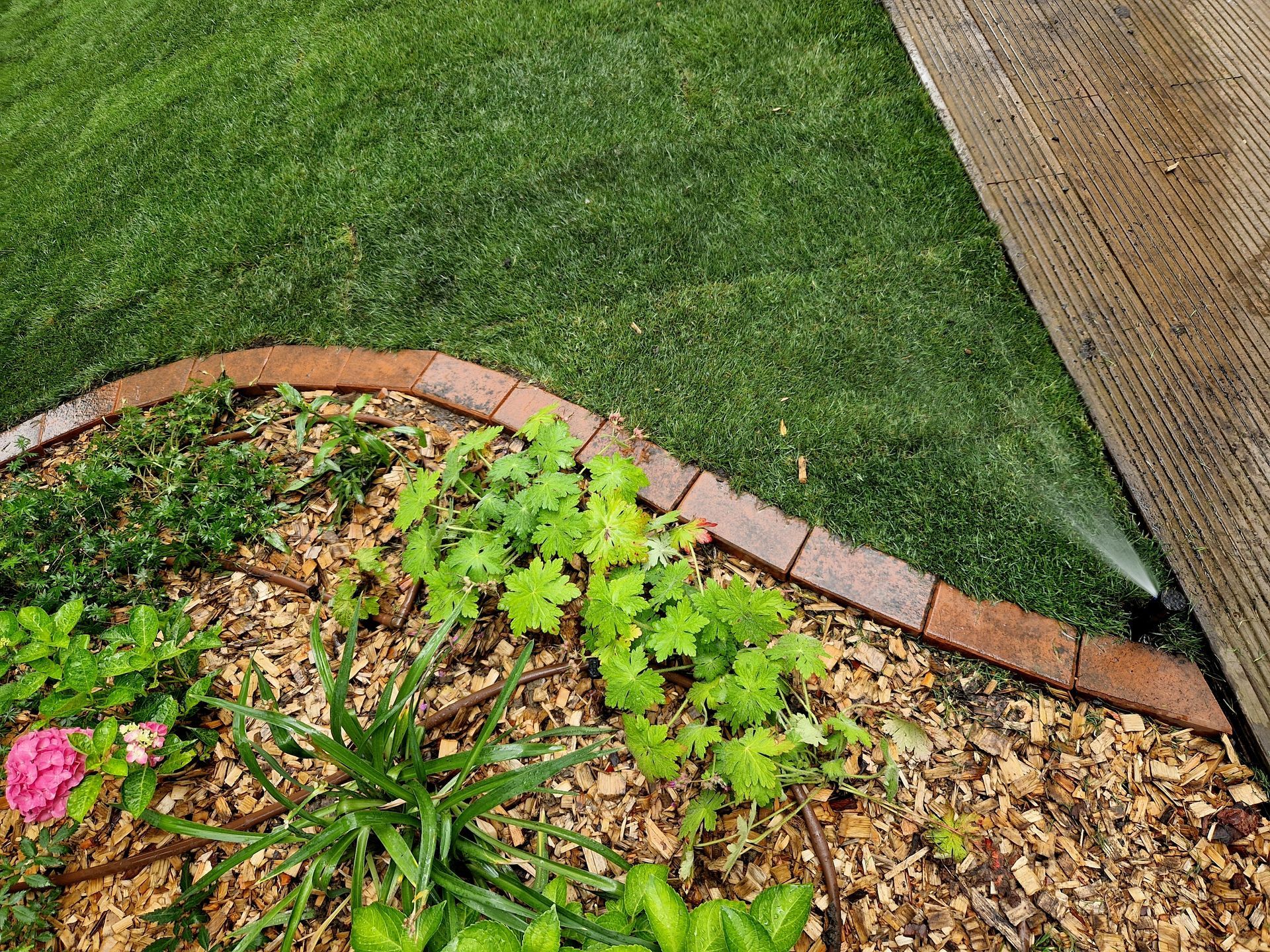
A crisp edge between turf and bed is the single fastest visual upgrade in most front yards. It signals care and intentionality without requiring any new plants or materials. Use a half-moon edger or a rotary edger to cut a clean vertical line, and repeat it every four to six weeks during the growing season.
Curved bed shapes work better than straight lines in most residential front yards because they echo the natural forms of the plants inside them. Sharp geometric beds look best against very modern architecture. In the brick-front homes common across Cypress and Katy subdivisions, a gentle curve from the driveway to the front door entry feels more natural and proportionate.
Metal or plastic landscape edging holds the line between mulch and grass between manual edgings. It also prevents St. Augustine from creeping into beds, which is a constant battle in Houston yards given how aggressively the grass spreads through its runners.
Refresh Mulch for Contrast and Moisture Control
Fresh mulch at three inches deep does three things at once: it suppresses weeds, holds soil moisture during Houston's dry spells, and creates a dark, uniform backdrop that makes plant foliage pop. Dark hardwood mulch or shredded pine bark works well in most front-yard beds.
Avoid piling mulch against plant stems or tree trunks. Volcano mulching, where mulch is mounded high around the base of a tree, traps moisture against the bark and encourages rot and disease. Keep mulch two to three inches away from stems and flared trunk bases.
In Houston's high-humidity climate, organic mulch breaks down faster than it does in drier climates. Plan to refresh beds once or twice a year. A full refresh in spring before the summer heat arrives keeps beds looking tidy through the peak growing season. Order in the beds sets the stage for the structural elements that frame the whole composition.
Add Hardscape and Lighting Where They Matter Most
Stone, pavers, and low-voltage lighting turn a landscaped yard into a finished outdoor space. These elements work best when they solve a functional problem while also improving appearance.
Walkways That Improve Access and Appearance
A four-foot-wide walkway from the driveway or public sidewalk to the front door handles foot traffic comfortably and reads as intentional from the street. Narrow builder-grade concrete walks, typically three feet wide, feel cramped and quickly date the exterior.
Concrete pavers, flagstone set in decomposed granite, or exposed aggregate concrete all hold up well in Houston's heat and occasional freeze-thaw cycles. Avoid unsealed natural stone in areas with standing water; in clay soil yards that drain slowly, slick stone surfaces after rain are a liability. Textured pavers or brushed concrete provide better traction.
If your existing walk is cracked, heaved, or disconnected from the driveway by a large step, fixing that before adding plants or lighting gives the most value per dollar spent.
Low-Voltage Lighting for Evening Presence
Landscape lighting extends the visibility of your curb appeal into the evening and makes the entry safer and more welcoming. The most effective placements are uplighting on a feature tree, path lights along the walkway, and a small spotlight or two directed at the front door or house facade.
- Uplighting: positions the fixture at ground level and points up into a tree canopy or onto the home's facade
- Path lighting: short, shielded fixtures that illuminate the walkway without glaring into visitors' eyes
- Wash lighting: low, wide-beam fixtures that graze across a bed or low hedge to add depth
- Downlighting: fixtures mounted in a tree or structure that cast light downward, mimicking natural moonlight
Low-voltage LED systems use minimal electricity and last for years in Houston's humidity. Smart controllers let you set automatic on/off times so the lighting runs consistently without any daily adjustment.
Good lighting and a clean walkway set the stage. But how you sequence these projects and where you invest first determine whether the results hold over the long term.
Plan Upgrades by Budget and Long-Term Value
Not every curb appeal project delivers the same return. Spending on aesthetics before fixing structural problems tends to produce results that look good briefly and then deteriorate.
Projects Worth Doing First
Grading and drainage come before anything visible. A yard that ponds after rain will damage new plantings, erode fresh mulch, and keep the lawn from establishing properly.
After drainage, the order that tends to produce the most durable improvement is:
- Lawn health and turf repair
- Bed edging and mulch refresh
- Foundation shrub selection and planting
- Walkway upgrade or widening
- Seasonal color and containers near the entry
- Low-voltage lighting installation
This order works because each layer supports the next. Healthy turf makes fresh mulch look better. Clean bed lines make new shrubs look intentional. A widened walkway makes the placement of lighting obvious.
When Professional Help Makes Sense
Some projects are genuinely DIY-friendly. Edging, mulching, installing path lights on a low-voltage system, and planting small shrubs are within reach for most homeowners on a weekend. Buying plants in three-gallon containers and spacing them correctly does not require a professional.
Grading, French drain installation, and large tree work are a different category. In communities like Bridgeland and Towne Lake, where HOA-managed drainage easements and underground utilities complicate yard work, a professional assessment prevents costly mistakes. A licensed contractor also understands how Houston's Vertisol clay soil moves seasonally, which affects where and how drainage solutions are installed.
If you are unsure whether your drainage problem is a DIY fix or something deeper, an on-site evaluation from a local landscape professional gives you the information to decide.
Frequently Asked Questions
What Are the First Three Landscaping Changes You Can Make to Make Your Front Yard Look Cleaner From the Street?
Edge your beds with a clean vertical cut, refresh your mulch to a uniform depth of 3 inches, and pull or treat any visible weeds in turf and beds. These three steps take a single afternoon and produce an immediate visual shift without any new plants or materials.
How Can You Boost Front-Yard Curb Appeal on a Tight Budget Without Creating a High-Maintenance Yard in Houston Heat?
Focus on native and Gulf Coast-adapted plants that require little intervention once established, such as dwarf yaupon holly or Knock Out roses. Pair those with clean edging and fresh mulch rather than annuals that need seasonal replacement. The lowest-maintenance improvements in Houston are the ones that work with the climate rather than requiring constant intervention to survive it.
Which Plants Hold Up in Houston Humidity and Clay Soil and Still Look Sharp in Summer, Especially in Cypress, Bridgeland, and Towne Lake?
Dwarf yaupon holly, loropetalum, Indian hawthorn, and Turk's Cap all tolerate clay soil and high humidity while maintaining their appearance through summer. For seasonal color, caladiums thrive in Houston's humid heat and perform well in the partially shaded beds common in Cypress subdivisions. These plants are available at most local nurseries and are well-matched to the growing conditions across Harris and Fort Bend counties.
How Do You Fix Soggy Spots and Poor Drainage in the Front Yard So It Dries Out Faster After a Gulf Coast Downpour?
Start by identifying whether the low spot is caused by grade or by a compacted clay layer underneath. Minor low spots can often be corrected by adding a compatible fill mix and regrading to establish a positive slope away from the foundation. Persistent pooling that does not respond to regrading usually indicates a need for a French drain or channel drain system, which routes water to an appropriate outlet.
What's the Simplest Way to Make a Small Front Yard Feel Bigger and More Put-Together Using Beds, Edging, and Mulch?
Keep the turf area as one clean, uninterrupted shape rather than breaking it into small islands. Run a single curved bed along the front of the house with a crisp edge, fill it with a few well-chosen shrubs at consistent spacing, and top with dark mulch. The contrast between the dark mulch, the green turf, and the plant foliage creates a sense of order that makes even a modest yard feel intentional and larger than it is.
What Lighting and Hardscape Updates Make the Front Entry Feel Safer and More Inviting on a September Evening Without Overdoing It?
Add two or three path lights along the walkway and one uplight positioned at the base of a front-yard tree or aimed at the house facade near the entry. Replace any cracked or heaved sections of the front walk so the surface is level and safe. These targeted additions create visible depth and warmth in the evening without cluttering the yard with fixtures.
Ready to Put This Into Action in Your Houston Yard?
Improving curb appeal in a Houston neighborhood is not about recreating what you see on a design blog. It is about building a front yard that holds up through the wet season, stays sharp through August, and fits the standards of the master-planned communities where many Houston-area homeowners live.
The steps in this guide follow a logical sequence: fix what is broken underground, establish healthy turf, plant the right species for Gulf Coast conditions, create order with clean beds and mulch, then add hardscape and lighting to finish the composition. Following that order protects your investment at every stage.
If your yard has drainage problems that go beyond basic grading, or if you want a professional eye on plant selection and bed layout, PearceScapes offers on-site consultations for homeowners across Cypress, Katy, and The Woodlands. Reach out to schedule a no-pressure conversation about what your specific yard needs.